Kitchen Automation & Connected Cooking
Separating the practical culinary tools from the novelty gadgets.
The Shift to Precision Cooking
The kitchen is arguably the room where technology can have the most immediate impact on the quality of daily life, yet it is also the room most prone to gadget bloat. While a refrigerator with a massive touch screen might look impressive, true kitchen automation is about precision, consistency, and reducing the margin of error in cooking.
Smart Scales and Connected Baking
Baking is chemistry, and chemistry requires exact measurements. Connected kitchen scales have emerged as a powerful tool for home bakers. Paired with interactive recipe apps, these scales guide you step-by-step. Instead of measuring out a cup of flour, you pour until the app chimes. Furthermore, if you only have 70% of the required sugar, a smart scale app can instantly recalculate all other ingredients to maintain the perfect ratio, virtually eliminating baking failures.
Temperature Automation: Sous-Vide and Smart Meat Thermometers
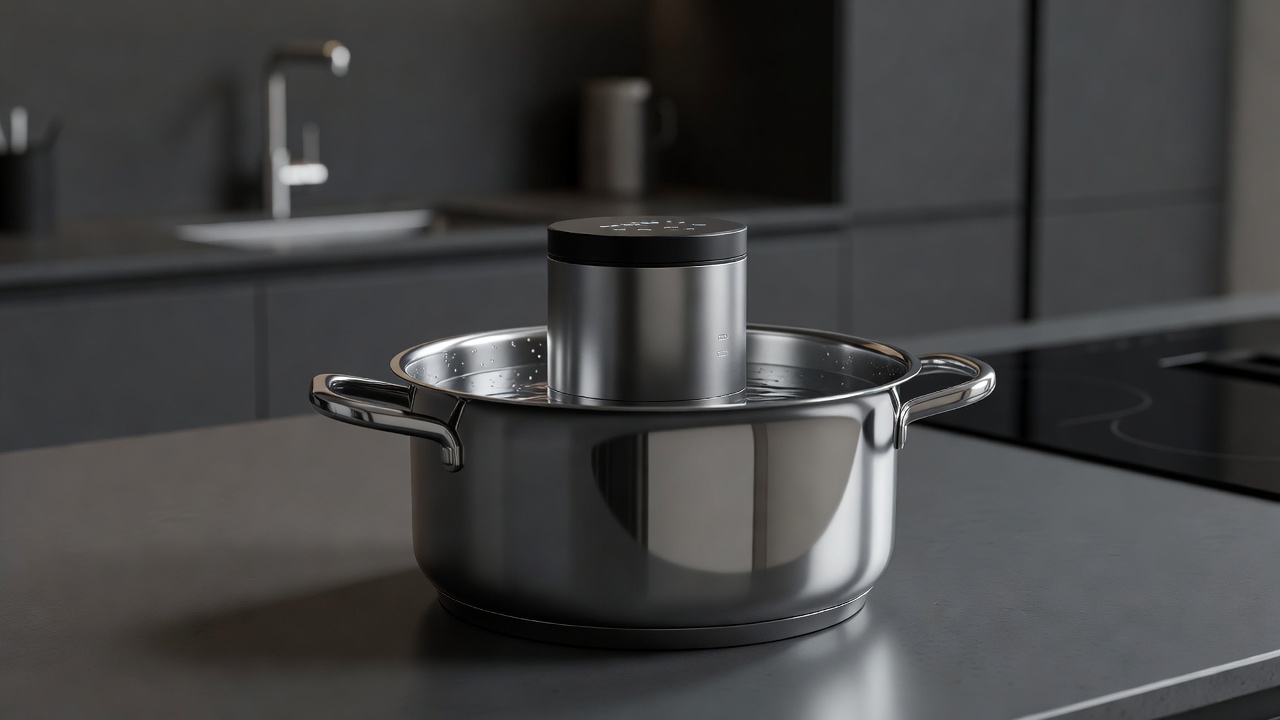
The most significant culinary upgrade of the last decade is the democratization of sous-vide cooking. Precision immersion circulators heat a water bath to an exact temperature (e.g., exactly 132°F for a medium-rare steak). The food, sealed in a bag, cooks gently and cannot overcook. Connected versions allow you to monitor the water temperature remotely and receive alerts when the food is pasteurized.
Similarly, truly wireless smart meat thermometers have transformed roasting and grilling. These probes measure both the internal temperature of the meat and the ambient temperature of the oven or grill. By running this data through predictive algorithms, the accompanying app can tell you exactly when the meat will be done, accounting for resting time.
The Reality of Smart Major Appliances
When it comes to large appliances, the value proposition changes. Smart ovens with built-in cameras allow you to watch your bread bake from your phone, which is fun but arguably unnecessary. However, features like remote preheating or scan-to-cook (where you scan a frozen food barcode and the oven automatically sets the optimal temperature and time) offer genuine convenience for busy households.
Smart refrigerators often feature interior cameras to help you check inventory while at the grocery store. While useful for preventing accidental double-purchases of milk, the manual input required for intensive inventory tracking often leads to feature abandonment. The most practical aspect of connected major appliances is actually diagnostics: receiving an alert on your phone that the freezer door was left ajar or that the water filter requires changing.
Automating the Morning Routine
Coffee preparation is highly subjective, but connected coffee makers and espresso machines aim to streamline the process. High-end connected machines allow you to dial in grind size, water temperature, and extraction time via a smartphone interface. More importantly, they can be scheduled to begin heating up before your alarm goes off, ensuring that your morning brew is ready exactly when you are.
Conclusion
The best kitchen technology doesn't try to cook the food for you; it provides the precision necessary for you to cook it perfectly yourself. When assessing kitchen gadgets, look for tools that solve a specific problem—like temperature control or precise measurement—rather than devices that simply add a Wi-Fi chip to a traditional tool without enhancing its core function.